From Alcohol-Based to Water-Based Coatings: a strategic shift for modern iron foundries
Year
2025
Customer
Kovis Livarna - www.kovis-group.com
Installed Equipment
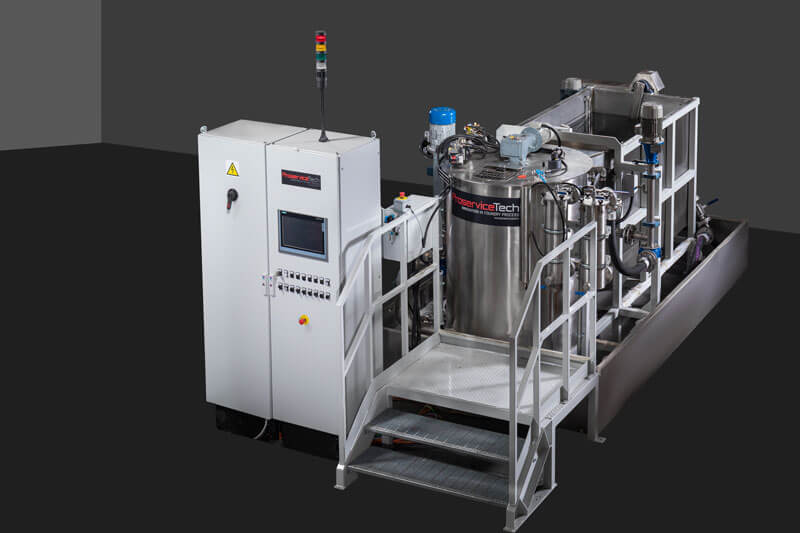
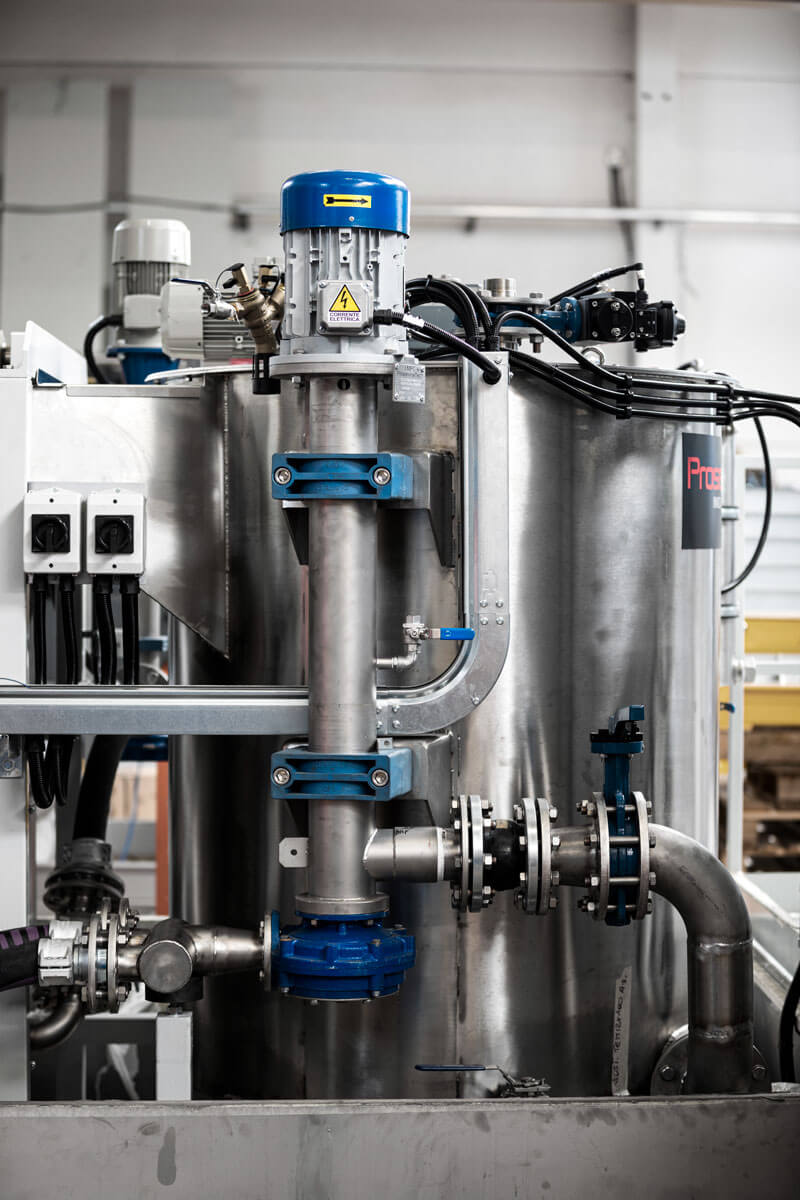
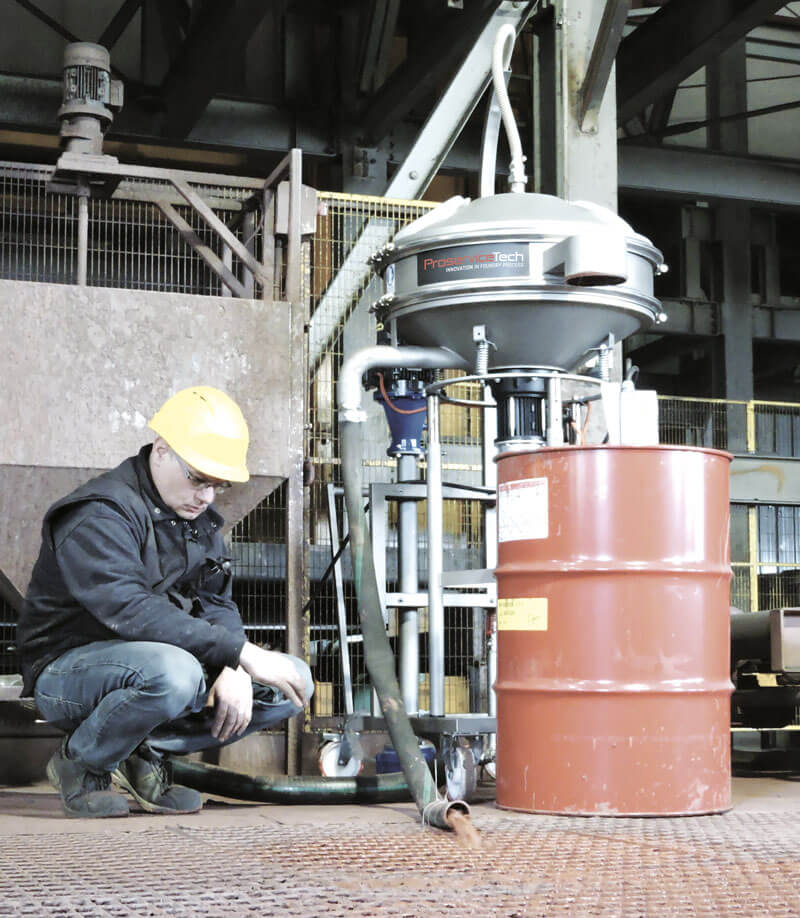
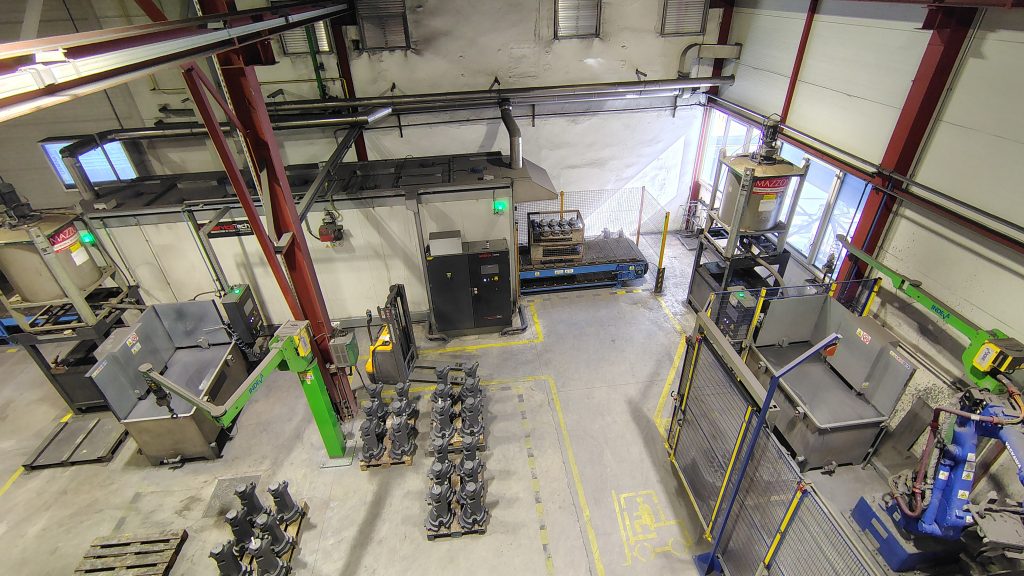
2 X ARENA ALL-in-ONE Custom, ARENA Vibro-filter, ARENA Drying oven, ARENA E-pump
Some significant data
10-15%
Drop of total processing costs
20-50%
Gas related defects reduction
20-30%
Coating cost reduction
In recent years, the foundry industry has been undergoing a significant transformation, driven by increasingly stringent environmental regulations under the Industrial Emissions Directive (IED) and the ongoing update of BREF documents, which define Best Available Techniques (BAT). These documents now represent the primary reference framework for setting emission limits and operating conditions for industrial installations. In particular, the latest BAT conclusions for iron foundries place strong emphasis on reducing emissions, improving resource efficiency, and progressively replacing substances with a higher environmental impact.
Within this context, the transition from alcohol-based to water-based coatings stands out as one of the most practical and effective ways to align with both regulatory requirements and market expectations. Water-based coatings enable a significant reduction in volatile organic compound (VOC) emissions, contributing to improved environmental performance and better workplace conditions. At the same time, they eliminate or greatly reduce risks related to flammability and the handling of hazardous substances, with positive impacts on safety, compliance costs, and permitting processes.
However, this transition is not merely a regulatory response. It is increasingly seen as a strategic choice for foundries aiming to enhance quality, ensure safer operations, and remain competitive in an international market that is ever more focused on sustainability. For this reason, the perspective of those who have already implemented this change is particularly valuable.
At the same time, foundries often face practical challenges when approaching this transition. One of the most critical aspects is the difficulty in identifying competent suppliers capable of properly analysing the existing process and proposing tailored solutions for coating application and drying systems. In many cases, current plant layouts were not originally designed to accommodate water-based technologies, creating constraints in terms of space, process flow, and integration. As a result, implementation requires not only new equipment, but also a holistic redesign of the coating process. This makes the role of experienced partners essential to ensure a successful and efficient transition. In this context, Proservice Srl stands out as a unique partner worldwide, supplying both drying ovens and advanced coating systems entirely designed and developed in-house, leveraging over 20 years of experience combined with a strong commitment to innovation and continuous development.
In this interview, Anže Tekavčič, Head of Strategic Development at Kovis Livarna, an iron foundry in Slovenia, shares direct experience of this transition. He highlights the role of BREF and BAT as key drivers for change and provides practical insights into the challenges and benefits of moving from alcohol-based to water-based coatings, combined with the installation of Proservice equipment.
Anže, why did you switch from alcohol-based to water-based coatings?
“In Kovis Livarna, we decided last year to transfer from alcohol-based to water-based core coatings. The biggest advantages we wanted to apply were improved safety and working environment with non-flammable coatings. We eliminated ATEX risks, we improved workplace conditions and also this strongly supports our compliance with breath and other emission regulations. With transition to water-based coatings we achieved lower operating cost with about 20-30% reduction of cost of coating material as well as 10-15% decrease of total processing cost”.
This switch was completed more than one year ago, so you have now collected sufficient data for a comparison. Was this transition complex to manage? What about casting quality?
“One of the most important improvements is the casting quality improvement which is enabled through the more stable and repeatable coating properties with automatic and constant coating mixing and this allows us to ensure more constant density of the coating as well as the thickness of coating application on the surface. All these parameters allow us to reduce risk for gas-related defects on castings from 20 to max 50% and also reduce risk for scrap which was one of the most important results for us which allowed us to directly transfer from alcohol-based to water-based coatings in 2-month time. “
In this case, a full process review across all stages is required. Was this also your experience?
“Yes, sure. The advanced drying technology is enabled by hybrid oven where we combine electric and gas heating system which allow us to optimize the energy consumption and up to 20% lower drying cost as well as high process flexibility which allow us to switch between different energy sources depending on the available energy sources and their cost volatility on European market.
The complete project was handled with good cooperation between the ProService team and Kovis team. From the start was main intention to optimize the process and the engineering phase. We have done tailor-made solution with study of entire process steps from the core handling to core coating and finally also to core drying.
Moreover the complete equipment allows full traceability and combined automation through the data-driven control of coating and drying equipment integration of manual and robotic dipping systems which reduces our dependency on labor skills.”